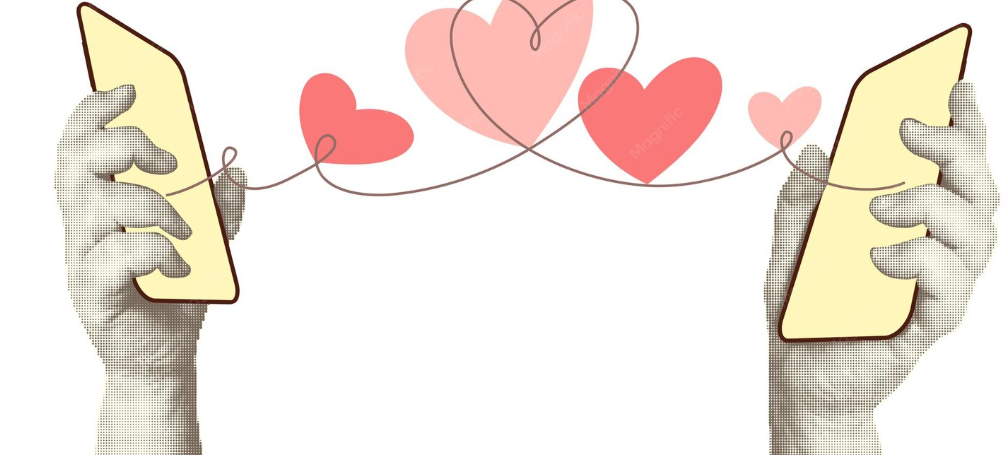
A young woman spent an hour scrolling through dating apps.
By the time she stopped, she had viewed hundreds of potential partners. Faces. Bios. Careers. Hobbies. Ambitions. Each person was evaluated in seconds.
Swipe.
Next.
Swipe.
Next.
Within a single evening, she had encountered more potential romantic partners than many of her ancestors would have met in an entire lifetime.
Yet instead of feeling hopeful, she felt strangely empty.
This is one of the most overlooked consequences of modern dating: human mating psychology evolved for scarcity, not abundance.
For most of human history, people chose partners from a relatively small social circle. Potential mates came from the local community, neighboring villages, family networks, or social groups. Choices were limited, and commitment often followed necessity as much as preference.
The human mind evolved within those conditions.
Modern dating apps have created something entirely different.
For the first time in history, people can browse thousands of potential partners without ever leaving their homes. The result is a psychological environment that our brains may not be fully equipped to handle.
Research on decision-making has repeatedly shown that excessive choice can create paralysis. When options become virtually unlimited, making a decision becomes more difficult rather than easier.
In dating, the effect appears even more pronounced.
An abundance of options encourages the escalation of standards.
Every potential partner is unconsciously compared not only to other real people but also to an imagined ideal—a flawless individual who possesses every desirable trait without any shortcomings.
The problem is that such a person does not exist.
Many people experience the same pattern. They begin talking to someone who seems promising. The conversations are enjoyable. There is attraction. Compatibility appears possible.
Then a small imperfection emerges.
Perhaps their sense of humor is different. Perhaps their lifestyle isn’t ideal. Perhaps they have a habit that seems mildly irritating.
Instead of exploring the connection further, the thought appears:
“There is probably someone better.”
The search continues.
What gets lost is the possibility that the imperfect person might have been more than sufficient. Perhaps even exceptional.
Studies examining online dating have found that greater access to options does not necessarily produce better outcomes. In many cases, it increases dissatisfaction and decreases commitment. The abundance of choice often becomes an obstacle rather than an advantage.
Evolutionary psychology offers one explanation.
In ancestral environments, endlessly searching for a perfect mate was not an effective strategy. Individuals who could identify a suitable partner, form a bond, and invest in the relationship were more likely to reproduce successfully than those who perpetually delayed commitment in pursuit of something better.
As a result, humans evolved psychological mechanisms that encourage attachment once a suitable partner is found.
Dating apps disrupt those mechanisms.
Instead of encouraging commitment, they continuously present alternatives. Every disagreement, every imperfection, every moment of uncertainty is accompanied by the awareness that thousands of other options are only a few swipes away.
The result is a mindset focused on comparison rather than connection.
Many users eventually discover that the most exciting part of online dating is not meeting someone. It is searching.
The anticipation becomes more rewarding than the outcome.

Behavioral psychologists have long recognized this pattern. Variable rewards—unpredictable outcomes delivered at irregular intervals—are among the most powerful reinforcers of behavior. The same principle drives gambling, social media engagement, and many forms of compulsive behavior.
Dating apps operate in a remarkably similar way.
Most profiles generate little interest. Most matches go nowhere. Most conversations fade quickly.
But occasionally there is a match that feels promising.
That possibility keeps people swiping.
The reward is not the connection itself.
The reward is the chance that the next swipe might lead to something extraordinary.
This subtle shift changes how people evaluate potential partners.
When meeting someone in person, attraction develops across multiple dimensions simultaneously. Body language, voice, personality, humor, confidence, warmth, and countless other signals contribute to the overall impression.
Online dating compresses that complexity into photos and short biographies.
People are forced to make decisions using incomplete information.
As a result, attraction often develops toward a carefully curated version of a person rather than the person themselves.
When reality eventually replaces imagination, disappointment frequently follows.
Adding another layer of complexity is the business model behind many dating platforms.
Dating apps are designed to maximize engagement. Their success depends on users continuing to return, continue browsing, and continue interacting with the platform.
Finding a life partner and leaving the app is beneficial for the user.
Remaining engaged is beneficial for the platform.
Those goals overlap at first, but eventually they diverge.
The longer someone remains in the ecosystem, the more likely they are to develop habits centered around searching rather than choosing.
Many long-term app users become highly skilled at evaluating profiles. They know exactly what they want. They recognize red flags instantly. Their filtering process becomes increasingly sophisticated.
Yet some struggle more than ever to commit.
The search itself becomes rewarding.
The fantasy becomes more compelling than reality.
Evolutionary psychology suggests this occurs because imagined possibilities often stimulate the reward system more intensely than known outcomes. A hypothetical perfect partner carries unlimited potential. A real partner carries both strengths and flaws.
The fantasy always wins the comparison.
Yet research consistently finds that many people who meet through traditional social environments report higher relationship satisfaction and stronger commitment than those who rely heavily on digital marketplaces.
The explanation may be surprisingly simple.
In real-world interactions, alternatives are less visible.
There is less comparison.
Less optimization.
Less searching.
The focus shifts from evaluating countless possibilities to understanding one actual person.
Commitment changes perception. Once people invest in a relationship, they often become more attentive to their partner’s strengths and more willing to work through imperfections.
The relationship becomes something to build rather than something to evaluate.
This may be why many individuals who step away from dating apps describe a different experience. The process becomes slower. Opportunities become less frequent. Choices become more limited.
Yet the connections often feel more grounded.
More human.
More real.
The modern dating landscape offers unprecedented abundance, but human psychology may still be adapted to a world of scarcity.
The challenge is not finding options.
The challenge is knowing when to stop searching.
Because sometimes the endless pursuit of someone better prevents people from recognizing that the person in front of them is already good enough.