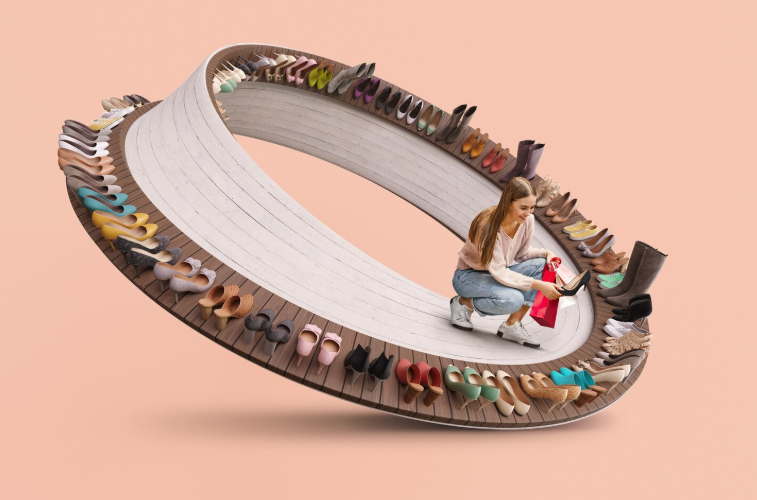
I had to choose between 47 jam varieties.
That’s not a metaphor. I was standing in a grocery store, holding a jar of apricot preserves, looking at 46 other options. Homemade. Organic. Low-sugar. Single-origin fruit. Jam from different regions of the world. And I froze.
The paralysis wasn’t about jam. It was my cognitive system overloading.
You’ve experienced this, even if you don’t have a name for it. The feeling when you’re trying to choose something and the abundance of information makes you less certain, not more. You know more options than ever before in human history. You make worse decisions because of it.
This is called decision fatigue. And it’s not a character flaw. It’s neurology.
Your prefrontal cortex has a limited energy budget. It can evaluate a certain number of options before it exhausts itself. Exceed that threshold and something shifts. Your brain stops carefully weighing options. It starts using shortcuts. Rules of thumb. Whatever heuristic lets it make a decision and move on.
And those shortcuts are terrible.
The research is clear. When people have too many choices, they choose based on:
The first option they encountered. The one they’ve heard about most. The one with the most intense emotional response. The option that’s easiest to explain, not necessarily the best.
But nobody experiences it as “I’m taking a mental shortcut.” It feels like they’re making a thoughtful decision. The cognitive bias is completely invisible from the inside.
I started noticing this in myself during the pandemic.
Suddenly everything became a choice. Which grocery delivery service? Which streaming platform? Which video call application? Which mask type? Which vaccine? Which political side? I was exhausted. Not from the decisions themselves, but from the cognitive load of evaluating options I had never anticipated having to evaluate.
And something happened: I stopped choosing carefully. I started choosing based on whatever required the least mental effort.
The app that was already on my phone. The opinion I’d heard first. The choice that my friend had made. Not because those were objectively best, but because my cognitive resources were depleted and my brain needed to conserve energy.
This is the dark secret of the information age. More information doesn’t lead to better decisions. Beyond a certain threshold, more information leads to decision avoidance, decision regret, and poorer choices.
The psychologist Barry Schwartz wrote about this extensively. He found that when people had abundant choice, they experienced:
More regret. The moment you choose something, you instantly know about all the things you didn’t choose. Your brain automatically starts wondering if you made the wrong call.
More anxiety. The responsibility of choosing well becomes crushing when you’re aware of dozens of alternatives.
Less satisfaction. Even when people choose exactly what they thought they wanted, they’re less satisfied because they know about better alternatives.
This isn’t supposed to be how choice works. In evolutionary time, choice was a luxury. You chose from what was available. You were grateful. End of story. Your brain developed a decision-making system that operated under scarcity.
Now we live under abundance. And our brains are wired for the opposite.
I watched a friend spend three weeks choosing a mattress. She read reviews. She compared specs. She calculated firmness ratios. She was trying to optimize for a decision that would be fine either way. She spent more time agonizing about the mattress than she would spend on it weekly for the next five years.

And you know what happened? She chose one and immediately regretted it. Not because it was bad. But because she knew about the other options. Her brain was always running the counterfactual: what if you’d chosen the other one?
The cruelest part of this is that deciding with limited information used to actually work. Your ancestors made life-defining decisions with almost no data. They chose partners, professions, homes, entire life directions based on incomplete information. And they were mostly fine.
Why? Because once they chose, they committed. They didn’t spend energy wondering about alternatives. They optimized their choice through their own actions. The mattress they chose became the best mattress because they treated it well. The partner they chose became the right partner because they invested in the relationship.
Now we have infinite information but can’t commit to anything. We keep one eye on the path not taken.
The solution cognitive scientists have found is counterintuitive: decide with less information.
Set a threshold. After examining five options, make a decision. Stop looking. The research shows that deciding quickly based on limited information leads to better outcomes than exhaustive evaluation. Your gut is running calculations your conscious mind can’t articulate.
But most of us do the opposite. We want to see more options. We want more information. We want to optimize. And in doing so, we paralyze ourselves.
I bought the apricot jam without looking at the other jars. It was fine. It was actually better than fine because I didn’t spend mental energy wondering if the other 46 were better.
That’s not settling. That’s wisdom.
Citation:
Schwartz, B. (2004). The paradox of choice: Why more is less. Ecco.
Iyengar, S. S., & Lepper, M. R. (2000). When choice is demotivating. Journal of Personality and Social Psychology, 79(6), 995-1006.
Vohs, K. D., Baumeister, R. F., Schmeichel, B. J., Twenge, J. M., Nelson, N. M., & Tice, D. M. (2008). Making choices impairs subsequent self-control: A limited-resource account of decision making, self-control, and active initiative. Journal of Personality and Social Psychology, 94(5), 883-898.
Simon, H. A. (1956). Rational choice and the structure of the environment. Psychological Review, 63(2), 129-138.