
My father woke up at forty-five and realized he’d become someone he didn’t want to be.
Not gradually. Not over years. Overnight, it seemed. One day he was moving through his constructed life. The next day he was suffocating in it.
He’d followed the script. The job. The house. The family. The pension. He’d done what he was supposed to do. And somewhere around the halfway point of life, he realized he’d forgotten to ask if any of this was what he wanted.
We call it a midlife crisis. As if it’s a psychological breakdown. As if it’s weakness or failure. As if the person is being irrational.
But the research suggests something different. The midlife transition might be a developmental process. A confrontation with reality that can’t be avoided forever.
Developmental psychology has long focused on childhood and adolescence. The assumption was that after you became an adult, development was mostly done. You either matured into adulthood or you didn’t. The rest was just living.
But the research on adult development shows something different. There are stages. Transitions. Points where you have to rebuild your understanding of yourself and your life.
Midlife is one of them.
It happens roughly between forty and fifty. The exact timing varies. But something neurobiological is shifting. The person is aware, maybe for the first time in years, that time is finite.
Not intellectually. Intellectually, people always know they’re going to die. But around midlife, this knowledge becomes real. It moves from abstract to embodied. You’re no longer on the ascending slope. You’re past the midpoint. The future is no longer infinite.
This awareness triggers what researchers call a mortality salience crisis. The person becomes acutely aware that they’ve spent half their life, and they need to account for it.
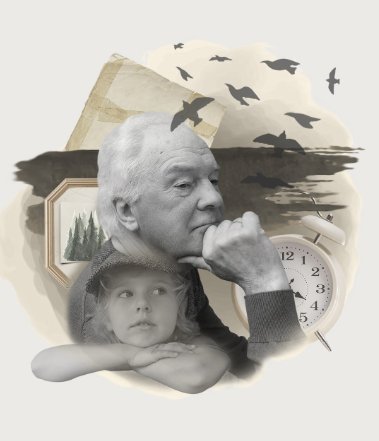
Did they become who they wanted to be? Did they do what they wanted to do? Did they build the life they actually wanted or the life they thought they were supposed to want?
For many people, the answer is no.
I watched this realization destroy my father. Not because he was unstable. But because he was finally seeing clearly. The success he’d built was not his success. It was a script written by expectation. By family. By culture. By the belief that there was only one way to be an adult man.
He became depressed. Not clinically, though it was close. But existentially depressed. Aware that he’d built a life that wasn’t aligned with his values. Aware that he was too far in to easily extract himself. Aware that time was running out.
This is the midlife crisis. Not a breakdown. A breakthrough. A moment of clear seeing.
The research on this shows that people who experience a genuine midlife transition often come out the other side more authentic. More aligned. More themselves. The crisis is painful. But it’s often the doorway to a more genuine life.
The problem is that society doesn’t support this transition. We tell people to ignore it. To push through it. To medicate it if necessary. To get back to work. To maintain the life they’ve built.
We treat the midlife transition as pathology instead of development.
I watched my father try to ignore it. Tried working harder. Tried more success. Tried accumulating more. Nothing fixed the fundamental problem: he was living a life that wasn’t his.
Finally, he had to change. He left the job. He left some expectations. He rebuilt his life around things that actually mattered to him. Not perfectly. Not without consequence. But he moved toward authenticity.
The research shows that people who successfully navigate the midlife transition are those who make significant changes. Who are willing to dismantle the life they built. Who are willing to disappoint people. Who are willing to be seen as failing.
It sounds radical. It is radical. But the alternative is spending the second half of your life in a life that’s not yours.
I think about how many people I know who are in this transition. Who are aware that something is wrong. But who don’t know that this is a normal developmental stage. Who think there’s something broken in them.
The man who’s successful but depressed. The woman who’s achieved what she was supposed to achieve but feels empty. The person who’s done everything right and doesn’t know why it feels wrong.
These aren’t broken people. These are people in transition. People being asked by their own psyche to become more authentic.
The neuroscience of this is beginning to be understood. There are measurable changes in the brain at midlife. The reward system recalibrates. The social brain becomes less dominant. The individual begins to assert itself.
This is experienced as crisis. But it’s actually the psyche trying to course-correct.
The tragedy is that many people don’t make this correction. They override the signal. They medicate it. They ignore it. They spend the second half of their lives in the same inauthentic life they’ve been living.
I watched my father’s transformation. It was not easy. He disappointed people. He failed by the metrics he’d been using. But he woke up. He became himself. And then he had time, however much was left, to live as that person.
The research on happiness shows that authenticity matters more than success. That living according to your values matters more than living according to expectations. That becoming yourself matters more than becoming what you were supposed to be.
The midlife transition is when this becomes undeniable.
I think about the people in their twenties and thirties who are building their lives. The pressure is enormous to build the “right” life. The life that will look good. That will be impressive. That will make sense to other people.
But the research on midlife suggests something important: if you build a life that’s not yours, you’ll have to unbuild it later. And unbuilding is harder than never building in the first place.
The teenager who ignores their passion because it’s impractical. The young adult who takes the safe job instead of the risky dream. The person who builds a life around shoulds instead of wants.
These are choices that look wise at the time. But they’re setting up the midlife reckoning.
My father was fortunate. He had the resources and the support to make the change. Many people don’t. Many people live the rest of their lives in the wrong life, ignoring the signal that says this isn’t working.
The midlife crisis is the psyche’s final attempt to tell you: you’re doing this wrong. Change. Become yourself. It’s not too late.
For many people, it’s the most important message they’ll receive.
Citation:
Erikson, E. H. (1950). Childhood and society. W.W. Norton & Company.
McAdams, D. P., & McLean, K. C. (2013). Narrative identity. Current Directions in Psychological Science, 22(3), 233-238.
Gould, R. L. (1978). Transformations: Growth and change in adult life. Simon & Schuster.
Labouvie-Vief, G. (2005). Self-with-other representations and the organization of the self. Journal of Research in Personality, 37(5), 443-454.