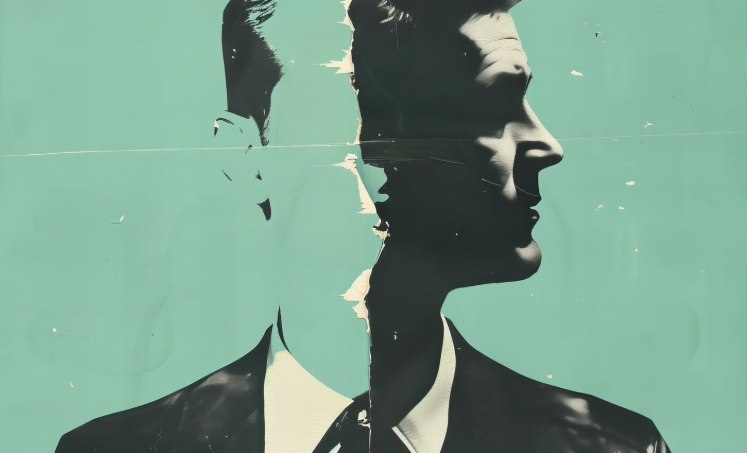
I watched it happen in a meeting.
Smart people. Accomplished people. People who individually would have immediately spotted the logical fallacy. But together, they let it slide. The CEO made an assertion that had no evidence. Someone nodded. Someone else nodded. By the time the idea had circulated through the group, it had transformed into consensus.
If I had pointed out the logical gap, the group would have stopped and thought. They would have agreed with me. They would have appreciated the catch. But I didn’t point it out. And neither did anyone else. And so a flawed idea became the foundation for a decision.
This is what cognitive science calls group-induced irrationality.
The strange paradox is that groups can be smarter than individuals. Studies show that diverse groups solving problems together often reach better solutions than individuals working alone. But that’s only true under specific conditions. When those conditions break down, groups become remarkably stupid.
The key conditions are: The group feels genuinely safe to disagree. There’s diversity of background and perspective. There’s a clear process for evaluating ideas. There’s no dominant authority figure whose opinion others feel compelled to match.
Remove any of these and something shifts. Critical thinking collapses. The group’s collective intelligence drops below what the individuals could achieve alone.
What happens neurologically is fascinating.
Your brain in a group is not the same brain you have alone. There’s additional processing dedicated to monitoring social dynamics. Reading facial expressions. Tracking status. Assessing threat. Evaluating conformity.
This extra processing doesn’t enhance your thinking. It interferes with it. The cognitive resources you would normally dedicate to analyzing an idea are redirected toward analyzing the social situation.
Someone speaks up with a contrary opinion. Your brain’s threat detection system activates. Not because the opinion is inherently threatening, but because disagreeing with the group is socially risky. Your amygdala registers danger. Your prefrontal cortex, the part that does critical thinking, gets temporarily hijacked.
This happens automatically. You don’t consciously decide to prioritize social safety over truth-seeking. Your brain just does it.
I noticed this in myself during contentious meetings. I would see the logical problem. I would recognize the flawed assumption. But somewhere between recognizing it and speaking, something would happen. I would imagine saying it. I would imagine the social reaction. And I would decide not to speak.
The cognitive cost of this is enormous. My brain had to work harder to suppress the thought. Then, once suppressed, the thought continued existing, distracting me from actually engaging with the decision being made.
The research on this is called social inhibition. When people work in groups, especially hierarchical groups with clear status differences, performance on cognitive tasks drops. The more complex the task, the larger the drop.
Interestingly, this doesn’t happen with simple, well-learned tasks. If the task is straightforward, groups can accelerate it. But for tasks requiring novel thinking, critical evaluation, or sophisticated reasoning, groups consistently underperform.
A meeting with the smartest people in the organization should generate the smartest ideas. In theory. In practice, it usually generates the ideas that the most powerful person is comfortable with.
This is why many organizations create systems to bypass this. Brainstorming sessions where criticism is explicitly forbidden. Anonymous suggestion boxes. Written comments before discussion. Anything to interrupt the normal social dynamics that suppress critical thinking.
But even these systems often fail because the suppression is unconscious.
Someone makes a suggestion that’s flawed. In an anonymous system, people might write critiques. But when those critiques come back to the person, they often soften them. The writer doesn’t want to be perceived as harsh or overly critical, even anonymously. So the critique becomes gentle. Polite. Insufficient.
The person who made the flawed suggestion never encounters the full weight of the criticism. And so the flawed idea persists.
I studied this in decision-making research. Groups often make worse decisions than their highest-functioning individual member. This is called process loss. The group has more information than any individual, but the process of combining that information is inefficient and biased.
Someone with information that contradicts the emerging consensus doesn’t share it because it feels like they’d be arguing against the group. The information stays private. The group makes a decision without it. Then afterward, when the decision turns out to be wrong, the person who had the contradictory information realizes they could have prevented the error.
But the social cost of speaking up felt too high.
The brutal truth is that groups actively punish critical thinking. I’ve watched it happen. Someone points out a flaw in the reasoning. They’re labeled as negative. Difficult. Not a team player. The label doesn’t have to be stated explicitly. It can be communicated through slight coolness, through being talked over the next time they speak, through being excluded from informal decision-making spaces.
Over time, people learn that critical thinking in groups gets you punished. So they stop doing it. They save their critique for private conversations. Or they don’t critique at all.
This creates a self-reinforcing dynamic where groups become progressively more irrational.
The first person who speaks up gets socially slapped. The second person observes this and stays quiet. The third person is never even tempted because the norm has been established: don’t disagree in this group.
I’ve seen organizations where this norm is so strong that meetings become theatrical. The actual decisions are made in private conversations. The group meetings are performances where consensus is demonstrated, not created.
The worst part is that this is often invisible to the people running the group. They believe they’ve created a psychologically safe environment. People feel welcome. People participate. But the participation is performance. The actual thinking happens elsewhere.
The research shows that the most irrationally behaving groups are often the ones most convinced that they’re being rational. They have structures that feel inclusive. They have processes that sound democratic. But the underlying dynamic is still suppression of dissent.
Breaking this requires extraordinary social courage. It requires someone being willing to be seen as difficult. To tolerate social discomfort. To risk being labeled as not a team player.
Most people won’t do this. It’s neurologically aversive. Your brain experiences social rejection as pain. Physical pain. Activating the same neural networks as actual injury.
So groups of smart people regularly make dumb decisions while believing they’re being rational.
And the smartest people in the group, the ones most likely to catch the flaw, stay silent.
Citation:
Latané, B. (1981). The psychology of social impact. Journal of Personality and Social Psychology, 36(4), 343-356.
Diehl, M., & Stroebe, W. (1987). Productivity loss in brainstorming groups: Toward the solution of a riddle. Journal of Personality and Social Psychology, 53(3), 497-509.
Stasser, G., & Titus, W. (2003). Hidden profiles: A brief history. Psychological Inquiry, 14(3-4), 304-313.
Schulz-Hardt, S., Brodbeck, F. C., Mojzisch, A., Kerschreiter, R., & Frey, D. (2006). Group decision making in hidden profiles: A comparative computer simulation. Organizational Behavior and Human Decision Performance, 101(2), 159-176.